
Gaming is often dismissed as distraction – time spent escaping reality rather than engaging with it. But this view misses something important.
Games are not just entertainment systems.
They are feedback systems.
Every level, loss, retry, and win trains how the self responds to challenge, failure, and improvement. In subtle ways, gaming has become one of the most influential learning environments of the modern age.
At Self Magazine, we look at gaming not as escapism, but as a mirror – one that reflects how the self learns, adapts, and persists.
Games Are Designed Around Failure – And That Matters
In most areas of life, failure is discouraged. In games, it’s expected.
Players fail constantly:
- Missed jumps
- Lost matches
- Defeated bosses
Yet failure isn’t framed as incompetence. It’s framed as information.
This design rewires how the self interprets setbacks:
- Failure becomes temporary
- Effort feels meaningful
- Progress is visible
Psychologists studying learning loops note that frequent, low-stakes failure accelerates skill acquisition.
Games normalise what real life often hides: mastery requires repetition.
Focus in Gaming vs. Focus in Daily Life
Many people struggle to concentrate at work or while studying – yet can focus intensely while gaming for hours.
The difference isn’t discipline. It’s design.
Games provide:
- Clear goals
- Immediate feedback
- Gradual difficulty curves
This creates flow, a state of deep engagement studied extensively by psychologist Mihaly Csikszentmihalyi.
The self isn’t magically better at focusing in games – it’s responding to a system built for sustained attention.
This contrasts with the fragmented attention discussed in Learning in the Age of Algorithms
Progress Is Visible – And Motivating
One reason games are compelling is that progress is measurable.
Levels increase. Skills unlock. Maps expand.
In real life, progress is often invisible:
- Learning feels slow
- Effort goes unrewarded
- Growth lacks feedback
Games solve this by breaking progress into visible steps.
Educational researchers at Stanford University note that visible progress increases persistence and motivation across learning environments.
https://ed.stanford.edu/
The self responds well when effort and improvement are clearly connected.
Choice, Agency, and the Empowered Self
Games give players agency.
You choose:
- How to approach challenges
- Which skills to upgrade
- When to take risks
This sense of control strengthens confidence. Even when players fail, they feel responsible – not helpless.
We explored this sense of agency in a different context in Money and the Modern Self: Redefining Financial Confidence Without Hustle Culture, where control mattered more than outcomes:
Agency changes how the self experiences difficulty.
Multiplayer Games and Social Learning
Online games are also social systems.
Players learn:
- Cooperation
- Communication under pressure
- Leadership and role flexibility
These environments simulate teamwork more dynamically than many formal settings.
According to research published in Frontiers in Psychology, cooperative gaming can improve social cognition and emotional regulation when balanced properly.
The self learns how behavior affects outcomes – not abstractly, but immediately.
When Gaming Becomes Avoidance
Of course, gaming isn’t automatically healthy.
Like any powerful system, it can be misused.
When gaming:
- Replaces real-world responsibility
- Avoids emotional discomfort
- Becomes compulsive rather than intentional
It stops being instructive and starts being anesthetic.
This mirrors patterns discussed in Listening to the Body: How Physical Awareness Reconnects the Self
The lesson isn’t to reject gaming – it’s to notice why it’s being used.
What the Self Can Borrow From Games
You don’t need to play games to apply their lessons.
The self can borrow:
- Clear goals instead of vague ambition
- Feedback loops instead of delayed judgment
- Permission to fail without self-criticism
These principles apply to learning, work, health, and creativity.
Educational platforms increasingly use game mechanics for this reason – a trend documented by UNESCO in digital learning frameworks.
Gaming as a Modern Training Ground
Gaming is one of the few places where effort feels meaningful, failure feels temporary, and progress feels real.
That’s not an accident.
It’s design.
When the self pays attention to why games engage so deeply, it gains insight into how motivation, focus, and resilience actually work.
At Self Magazine, we believe modern life needs better learning systems – and some of them already exist, hiding in plain sight.
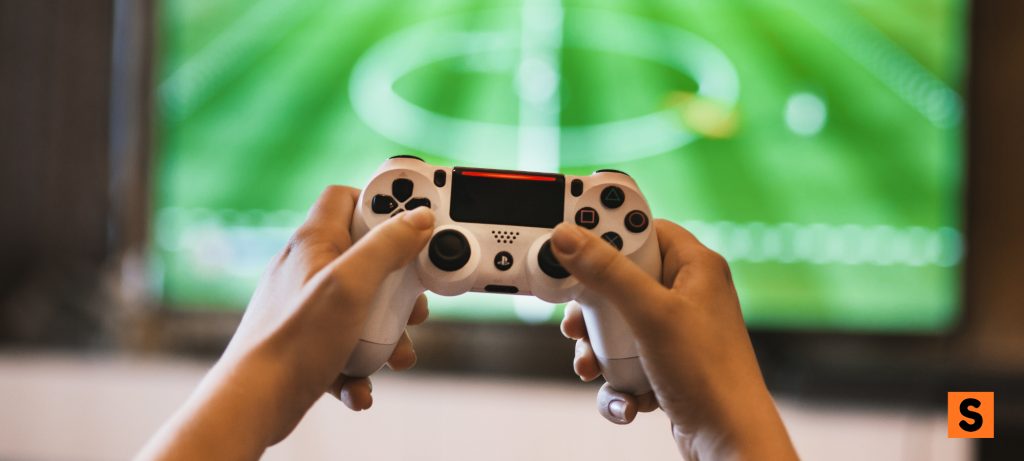
Sometimes, the controller is just a classroom in disguise.